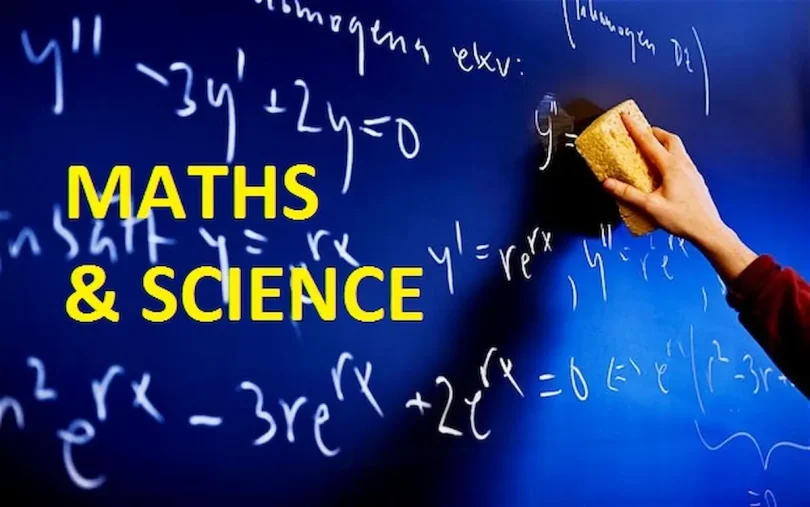

Mathematics and science are two of the most important subjects for students. They form the foundation for critical thinking, problem-solving, and understanding the world around us. However, many students find math and science challenging because they involve formulas, concepts, experiments, and logical reasoning.
With structured math and science lessons, students can learn these subjects step by step, build confidence, and improve academic performance. This guide will help students understand the importance of math and science lessons and how to study them effectively.
Why Math and Science Lessons Are Important

Math and science lessons are crucial because they:
- Develop logical thinking and problem-solving skills
- Improve analytical and reasoning abilities
- Provide a strong foundation for advanced studies
- Help in real-life applications, like technology, engineering, and medicine
- Prepare students for exams and competitive tests
Types of Math Lessons for Students
1. Basic Arithmetic Lessons
These lessons focus on addition, subtraction, multiplication, division, and understanding numbers. They are the foundation for all future math learning.
2. Algebra and Geometry
Algebra teaches students to work with variables and solve equations, while geometry introduces shapes, sizes, and properties of objects.
3. Advanced Math Lessons
Lessons in calculus, statistics, and trigonometry help students understand higher-level concepts and are often part of higher secondary and college-level studies.
4. Practical Math Lessons
Lessons that include real-life applications, such as measurements, money calculations, and problem-solving exercises, help students relate math to everyday life.
Types of Science Lessons for Students
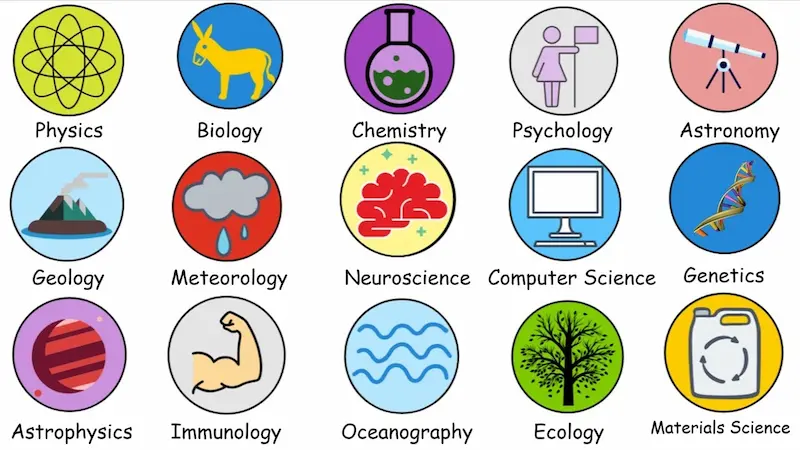
1. Physics Lessons
Physics lessons explain concepts like motion, energy, forces, and electricity. Experiments and examples make lessons easier to understand.
2. Chemistry Lessons
Chemistry lessons cover matter, chemical reactions, elements, and compounds. Simple experiments and illustrations help students understand difficult topics.
3. Biology Lessons
Biology lessons focus on living organisms, human anatomy, plants, and ecosystems. Visual aids like diagrams and charts improve comprehension.
4. Environmental Science
Lessons on ecology, climate, and sustainability help students understand the world around them and develop awareness of environmental issues.
You may also like it:
Time Management for Students: Smart Tips to Use Time Wisely
Online Subject Lessons for Easy and Flexible Learning
Test Preparation Guide – Step-by-Step Plan to Score High
Step by Step Learning Guide for Easy and Effective Learning
Tips for Learning Math and Science Lessons Effectively
1. Understand the Concepts
Don’t just memorize formulas or facts. Focus on understanding the “why” and “how” behind each concept.
2. Practice Regularly
Math and science require problem-solving skills. Solve examples, exercises, and previous exam questions to strengthen understanding.
3. Use Visual Aids
Diagrams, charts, graphs, and illustrations make complex concepts easier to grasp, especially in biology, physics, and chemistry.
4. Conduct Experiments
Practical experiments help students see theories in action. Simple home or lab experiments can make learning fun and memorable.
5. Take Notes
Writing key points and formulas helps with revision and improves memory retention.
6. Ask Questions
Never hesitate to ask teachers or peers for clarification when a concept is unclear. Understanding early prevents confusion later.
7. Revise Frequently
Regular revision ensures that math formulas, science definitions, and key concepts are remembered for exams.
Benefits of Math and Science Lessons for Students
- Builds problem-solving and analytical skills
- Prepares students for higher studies and careers in STEM
- Improves logical thinking and decision-making
- Encourages curiosity and exploration
- Enhances academic performance
Final Thoughts
Math and science may seem challenging at first, but structured lessons make them easier to understand. By practicing regularly, using visual aids, conducting experiments, and focusing on concept clarity, students can master both subjects effectively. With consistent effort and the right strategies, math and science lessons can become enjoyable and rewarding.
FAQs: Math and Science Lessons
1. What are math and science lessons?
Math and science lessons are structured learning sessions that teach students concepts, problem-solving techniques, experiments, and theories in mathematics and science subjects.
2. Why are math and science lessons important for students?
They help students develop logical thinking, problem-solving skills, analytical abilities, and a strong foundation for higher studies and STEM careers.
3. How can students learn math and science effectively?
Students can learn effectively by understanding concepts, practicing regularly, using visual aids, conducting experiments, taking notes, and revising frequently.
4. Are math and science lessons suitable for beginners?
Yes, beginner-friendly lessons focus on simple concepts, step-by-step explanations, and practical examples, making them easy to understand for all students.
5. How often should students practice math and science lessons?
Daily practice of formulas, exercises, and experiments, even for 30–60 minutes, improves understanding and retention over time.