
Many students believe that studying longer hours automatically leads to better grades. In reality, long study sessions without a proper strategy often result in stress, confusion, and poor memory. The real secret behind academic success is not hard work alone—it is smart work. By applying the right smart study techniques, students can learn faster, understand concepts deeply, and remember information for a long time.
This guide explains proven and practical smart study techniques that can help students at any level improve learning efficiency and academic performance.
What Are Smart Study Techniques?
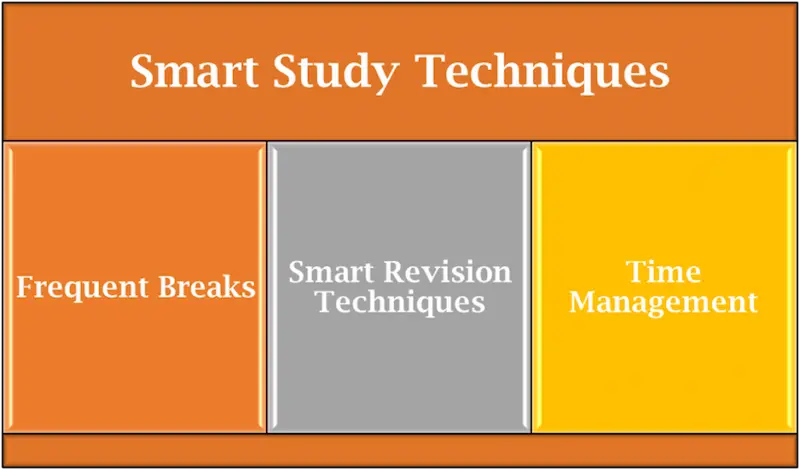
Smart study techniques are learning methods that focus on efficiency, understanding, and retention. Instead of wasting time on passive reading or last-minute cramming, these techniques help the brain absorb information in a structured and meaningful way.
Smart studying helps you:
- Learn more in less time
- Improve memory and recall
- Reduce exam anxiety
- Stay motivated and confident
- Maintain a healthy study-life balance
Why Smart Study Techniques Matter More Than Long Study Hours
Studying for long hours without breaks can cause mental fatigue. The brain has a limited attention span, and overloading it reduces productivity. Smart study techniques allow students to use their energy wisely, making study sessions more effective and less stressful.
Smart Study Techniques for Effective Learning
1. Set Clear and Achievable Study Goals
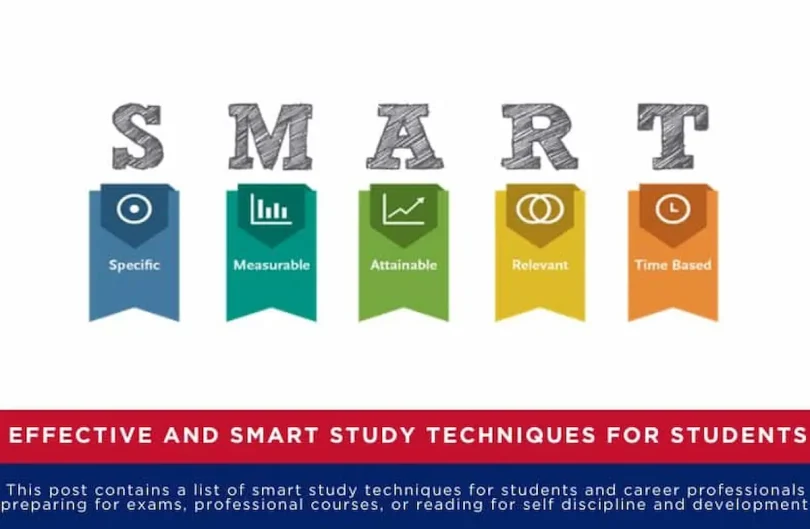
Goal setting gives direction to your study session. Instead of vague goals like “study math,” set specific goals such as “solve 20 algebra questions in one hour.” Clear goals keep you focused and improve motivation.
2. Create a Personalized Study Plan
Every student learns differently. A good study plan considers your strengths, weaknesses, and available time. Divide subjects into small sections and allocate time accordingly. A structured plan is one of the most powerful smart study techniques.
3. Use Time-Management Techniques
Time management plays a key role in smart studying. Techniques like the Pomodoro method (25 minutes of study followed by a 5-minute break) help prevent burnout and improve concentration.
4. Focus on Active Learning
Passive reading is not effective. Active learning engages the brain and improves understanding. Use methods such as:
- Writing notes in your own words
- Asking “why” and “how” questions
- Teaching topics to others
- Summarizing lessons aloud
Active learning is a foundation of smart study techniques.
5. Understand Concepts Instead of Memorizing
Memorization without understanding leads to confusion during exams. Focus on understanding the logic behind topics. When concepts are clear, memorization becomes easier and more natural.
6. Use Visual Learning Tools
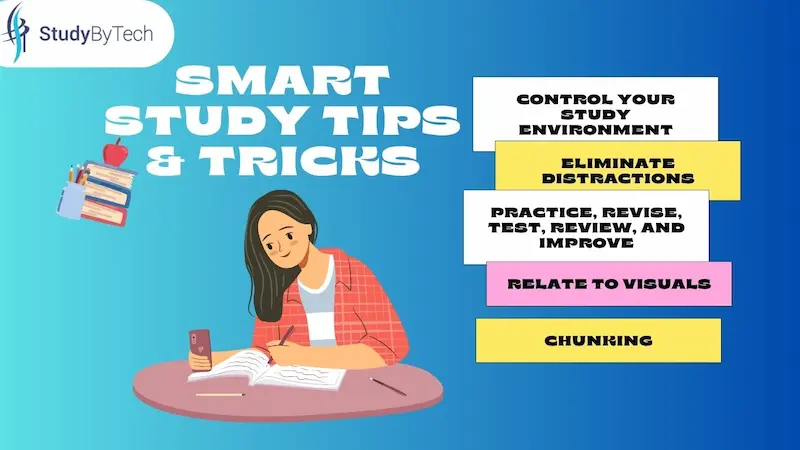
Visual aids like diagrams, charts, mind maps, and flowcharts make complex topics easier to understand. Visual learning improves retention and speeds up revision.
7. Apply Spaced Revision Techniques
Spaced revision means reviewing topics at regular intervals instead of cramming. This technique strengthens long-term memory and improves recall during exams.
8. Practice with Questions and Past Papers
Solving practice questions helps you apply what you’ve learned. Past papers reveal exam patterns, common questions, and time management strategies. Practice builds confidence and reduces exam fear.
9. Create a Distraction-Free Study Environment
A noisy or cluttered space reduces concentration. Study in a clean, quiet place with minimal distractions. Keep mobile phones away or use focus apps to avoid interruptions.
10. Take Regular Breaks
Short breaks refresh your mind and prevent mental exhaustion. Use breaks to stretch, drink water, or relax your eyes. Balanced breaks improve study efficiency.
11. Use Technology Wisely
Educational apps, online lectures, and digital notes can support smart studying. However, avoid unnecessary screen time and social media distractions during study hours.
12. Maintain Physical and Mental Health
Good health supports better learning. Get enough sleep, eat nutritious food, exercise regularly, and stay hydrated. A healthy body leads to a sharper mind.
You may also like it:
Time Management for Students: Smart Tips to Use Time Wisely
Online Subject Lessons for Easy and Flexible Learning
Test Preparation Guide – Step-by-Step Plan to Score High
Step by Step Learning Guide for Easy and Effective Learning
Smart Study Techniques for Exam Preparation
- Start preparation early
- Focus more on weak subjects
- Revise daily and weekly
- Avoid last-minute cramming
- Stay calm and positive
Exam success depends on strategy, not panic.
Common Mistakes Students Should Avoid
- Studying without a plan
- Ignoring revision
- Multitasking
- Studying while tired
- Relying only on memorization
Avoiding these mistakes makes smart study techniques more effective.
How Long Does It Take to See Results?
With consistent use of smart study techniques, students usually see improvement within 2–3 weeks. Better understanding, improved memory, and higher confidence are common outcomes.
Final Thoughts
Academic success is not about studying harder—it is about studying smarter. By applying these proven smart study techniques, students can reduce stress, improve learning efficiency, and achieve better results. Make smart studying a daily habit, and success will follow naturally.
FAQs: Smart Study Techniques
1. What are smart study techniques?
Smart study techniques are effective learning methods that help students understand concepts better, remember information longer, and study efficiently without wasting time.
2. How do smart study techniques help students?
Smart study techniques help students improve focus, manage time better, reduce exam stress, enhance memory, and achieve better academic results with less effort.
3. Are smart study techniques suitable for all students?
Yes, smart study techniques are suitable for school students, college students, and competitive exam aspirants. They can be adjusted according to learning style and academic level.
4. How can I start using smart study techniques?
You can start by setting clear goals, creating a study plan, studying in short focused sessions, revising regularly, and avoiding distractions like mobile phones.