
In every stage of education, from school to university, students face one common challenge: how to study effectively. Many students spend long hours studying but still struggle to get good results. The reason is simple—they lack the right approach. Strong study skills for students are the foundation of effective learning, better understanding, and long-term academic success.
This detailed guide explains what study skills are, why they matter, and how students can develop them step by step in an easy and practical way.
What Are Study Skills?

Study skills are a set of strategies, habits, and techniques that help students learn efficiently. These skills allow students to understand concepts clearly, remember information for longer periods, manage time properly, and perform well in exams.
Study skills are not natural talents. They are learned behaviors that improve with practice and consistency. Any student can develop strong study skills, regardless of intelligence level or academic background.
Importance of Study Skills for Students
Study skills for students are important because education today is highly competitive. Students must handle multiple subjects, deadlines, exams, and assignments at the same time.
Good study skills help students:
- Learn faster and more effectively
- Improve academic performance
- Reduce stress and exam anxiety
- Build self-confidence
- Develop independence in learning
Students with proper study skills feel more organized and motivated, while those without them often feel overwhelmed.
Core Study Skills Every Student Must Develop
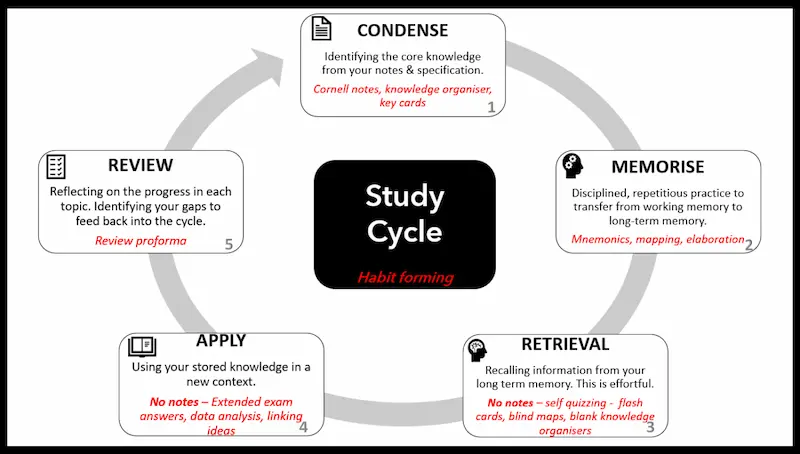
Below is a detailed explanation of the most important study skills for students.
1. Time Management Skills
Time management is one of the most essential study skills for students. Poor time management leads to stress, missed deadlines, and poor exam performance.
How students can improve time management:
- Create a daily and weekly study timetable
- Allocate specific time slots for each subject
- Prioritize difficult or important tasks
- Avoid procrastination and last-minute studying
When students manage time properly, they can balance studies, rest, and personal life more effectively.
2. Goal Setting Skills
Goal setting gives students a clear direction. Without goals, students often feel lost and unmotivated.
Effective goal-setting strategies:
- Set short-term goals (daily or weekly targets)
- Set long-term academic goals (semester or yearly goals)
- Make goals realistic and measurable
- Review and adjust goals regularly
Goal-oriented students stay focused and are more likely to achieve academic success.
3. Effective Note-Taking Skills
Note-taking is more than just writing what the teacher says. It is about understanding and organizing information.
Best note-taking practices:
- Write keywords instead of long sentences
- Use bullet points, headings, and symbols
- Highlight important points
- Rewrite or review notes after class
Good notes make revision easier and save time during exams.
4. Reading and Comprehension Skills
Reading is a major part of learning, but many students read without understanding.
How students can improve reading skills:
- Skim the topic before detailed reading
- Read with questions in mind
- Identify main ideas and supporting details
- Summarize what you read in your own words
Active reading improves comprehension and reduces the need for repeated reading.
5. Concentration and Focus Skills
Distractions such as mobile phones, social media, and noise can seriously affect learning.
Ways to improve focus while studying:
- Study in a quiet and comfortable environment
- Keep your phone away during study time
- Study in short sessions with breaks
- Avoid multitasking
Improved concentration helps students understand more in less time.
6. Memory and Retention Skills
Remembering what you study is just as important as understanding it. Many students forget information because they do not revise properly.
Memory improvement techniques for students:
- Revise topics regularly
- Use mind maps, charts, and diagrams
- Teach the topic to someone else
- Practice writing answers
These methods help transfer information from short-term memory to long-term memory.
7. Exam Preparation Skills
Exams are stressful, but proper preparation can make them manageable.
Smart exam preparation tips:
- Start revision well before exams
- Practice past papers and sample questions
- Focus more on weak areas
- Manage time during exams wisely
Prepared students feel confident and perform better under pressure.
8. Stress Management Skills
Academic pressure can lead to stress, anxiety, and burnout if not handled properly.
Healthy stress management techniques:
- Take regular breaks during study sessions
- Get enough sleep every night
- Eat healthy and stay hydrated
- Practice relaxation or deep breathing
A calm mind improves focus, memory, and learning ability.
9. Self-Motivation and Discipline
Motivation keeps students going, especially during difficult times.
How students can stay motivated:
- Remind yourself of your goals
- Celebrate small achievements
- Avoid negative comparisons
- Stay consistent even on low-energy days
Self-discipline ensures students continue studying even when motivation is low.
You may also like it:
Time Management for Students: Smart Tips to Use Time Wisely
Online Subject Lessons for Easy and Flexible Learning
Test Preparation Guide – Step-by-Step Plan to Score High
Step by Step Learning Guide for Easy and Effective Learning
How Students Can Build Strong Study Skills
Developing study skills for students takes time and practice. Students should:
- Start with small changes
- Stay consistent with routines
- Learn from mistakes
- Adjust study methods when needed
There is no single method that works for everyone. Students should find what suits them best.
Final Conclusion
Strong study skills for students are the key to effective learning and long-term academic success. They help students manage time, understand concepts deeply, remember information, and perform confidently in exams. More importantly, study skills prepare students not only for education but also for future professional life.
Success in studies is not about studying harder—it is about studying smarter. With the right study skills, every student can achieve their academic goals.
FAQs: Study Skills for Students
1. What are study skills for students?
Study skills for students are techniques and habits that help learners study effectively. These include time management, note-taking, reading strategies, concentration, memory improvement, and exam preparation skills that make learning easier and more efficient.
2. Why are study skills important for students?
Study skills are important because they help students understand subjects better, save time, reduce stress, and achieve better academic results. With strong study skills, students can learn more in less time and feel more confident during exams.
3. Can study skills be learned or improved?
Yes, study skills can be learned and improved with practice. Any student can develop better study habits by staying consistent, trying different techniques, and adjusting methods that work best for their learning style.
4. Which study skills are most important for students?
Some of the most important study skills for students include time management, goal setting, effective note-taking, active reading, concentration, memory techniques, and exam preparation skills.
5. How can students improve concentration while studying?
Students can improve concentration by studying in a quiet environment, keeping mobile phones away, taking short breaks, avoiding multitasking, and following a structured study routine.